
Bio
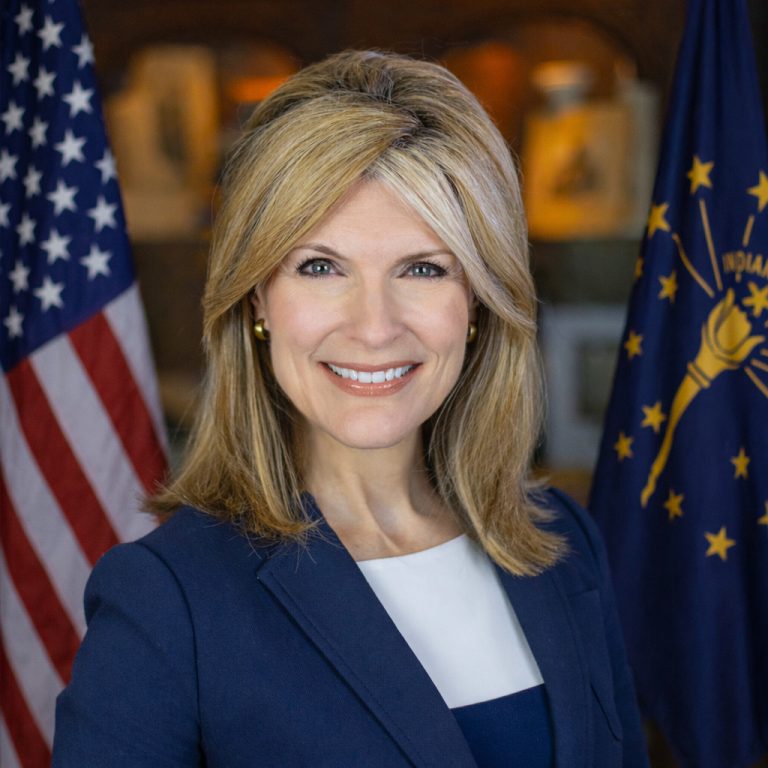
Cynthia “Cinde” Wirth is a lifelong Hoosier and long-time resident of Bartholomew County. Wirth spent more than 10 years teaching biology and environmental science at Columbus Signature Academy before serving as a science and education expert in Congress from 2018-2019. She is focused on strengthening public education, improving access to affordable healthcare and safeguarding our environment.
Q&A
Why are you running to represent Indiana’s sixth Congressional District?
So I was a public school teacher, and I saw things happening in my classroom: families were struggling, students were having to work a couple of jobs to fill in for their parents, and they still were not always able to make ends meet. That combined with the EPA being rolled back in 2017 while I was teaching environmental science, motivated me to try and find out what I could do to make a difference. I didn’t know if there was a role for me or not, but I’m a scientist and I went looking. I found that there was a fellowship on Capitol Hill, and I applied for it and got it. So I ended up on Capitol Hill for a year as a fellow, and learned how policy works, how it affects people, how it’s written, how it’s negotiated, all of the nuts and bolts of that, and came home and decided what I needed to do was run for office.
What do you feel is the biggest responsibility of a member of Congress?
Supporting and fighting for the people of their district and for what they need. The people who live in the district that a congressperson represents are why the congressperson is there. So if that congressperson is fighting for anything other than what the people in their district need, they’re not doing their job. I also feel that, as a member of congress, you need to hold the other two branches of government accountable and uphold our Constitution, which is not being done right now.
What committees do you feel you’d be best equipped to serve on in this upcoming session?
When I was a fellow, I was in the personal office of the chairwoman of the Science, Space and Technology Committee, and that would be where I would really want to be, because that’s my background. However, since then I have finished a PhD in cultural and educational policy, so I feel the education committee would be another place where I could have a large impact. I’ve also done a lot of work with transportation, specifically with alternative fuels. I was the educational ambassador to Miyoshi, Japan. While there, I rode in the first production hydrogen fuel cell car and learned a lot about how alternative fuels could help our environment, so I also feel that I could do a lot of good on the transportation committee. So those three committees are what I would be the most interested in serving on, but I’m willing to work on any committee that leadership feels I’d be a good addition to.
What do you think is the biggest problem facing the residents of the sixth district, and how would you address it?
There’s a lot. I am in all 3000 square miles of the sixth district every week. It’s 11 counties and three partial counties, it’s big and a lot of it’s rural. Healthcare is by far and away the number one struggle right at this moment because it’s driving our standard of living down. We’re not just losing rural hospitals, we’re also losing access to certain services, such as maternal care, in Johnson County, meaning that anybody who needs maternal care has to go over the county line into Marion County to get it. The lack of access to healthcare services is a much bigger issue in the more rural parts of the district, as some live more than an hour away from major hospitals. That’s concerning and probably the number one issue. I also feel that protecting Social Security and Medicare is important due to our large senior population. Another issue is that our wages are also not keeping up with inflation, and we need to move toward a living wage. Housing has also become unaffordable for most people recently, and renting is even worse. I also think we need to focus on safeguarding our environment and move towards sustainable power that won’t pollute our water and air. It’s a bit of a laundry list, but I feel that each issue is important.
The sixth district covers a large area with many unique communities within it. How will you ensure you represent these communities fairly?
By being out in all of those communities, across all 11 counties. They all have a little different character and a little different flavor, but people are all the same. People really just want to be able to work a good job, go home at night, have some breathing room, have some leisure time and be with their family. I’m traveling in all 11 counties right now, going to every community, and listening to people. I’ll meet with anybody who wants to and listen to their concerns.
How would you handle a situation where the desires of your constituents conflict with the desires of party leadership?
It’s about the people, not the party, not corporations, not profits. That’s my line in the sand. If the party wants something different than what the people who I’m serving need, I’ll choose to serve the people, and that’s the job.
How would you work across the aisle to deliver results for your constituents?
So I’m a little bit different in that I’ve had practice doing that. When I was a fellow on the Hill, I wrote a bill that ended up passing the House, passing the Senate and was signed into law. It was an originally written bill, which is unusual. I didn’t know that, I was just handed a project and asked, “Can you make this go?” and so I made the bill go. That involves writing it in such a way that it benefits the most people and will be amenable to people from the other party. When I first wrote that bill, the House Democrats were in the minority, so I had to write it in such a way that when I took it to Republican offices, they were happy to sign on, and they were. Not every bill is going to be that easy, I recognize that, but I’ve been through the process. I’ve had to go into Republican offices and talk to the staff. I was part of the staff and had to make the case, figure out what objections they had and work from there. I know what to expect.
Why should voters support you?
I’m just like everybody else. I am a working person. I’m still a member of the AFT Teachers Union. I believe wholeheartedly that people are our government. I don’t think because you’re wealthy that gives you any more intellect, any more insight, or any more rationale that you should wield power. To me, this seat is about representation and not power. I’m not after power; I’m after representation and using the education that I have been fortunate enough to access to solve problems that everyday people have.