

Bio
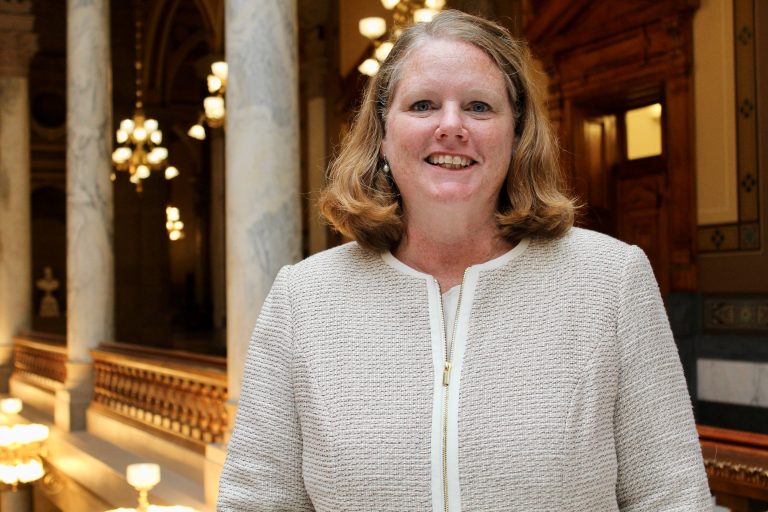
Elise Nieshalla has served as the Indiana State Comptroller since 2023. She is a mother of four and lives in Zionsville. Nieshalla earned a bachelor’s degree from Oral Roberts University before earning a master’s degree from Indiana University, where she also taught as an adjunct faculty member. She spent over 20 years working in real estate and served for seven years on the Boone County Council. Her top priorities include promoting responsible fiscal policy, continuing to provide transparency regarding government spending and providing seamless distribution of tax revenue to local governments.
Q&A
Why are you running for Indiana State Comptroller?
I’m running to continue to keep Indiana financially strong, transparent, responsible and disciplined. It’s my pleasure to serve as a leading financial officer. We handle the accounting and the reporting of the state’s funds. We handle the state’s payroll and pay the state’s vendors. We distribute tax revenues collected by the Department of Revenue and distribute those out to the local units, including counties, cities, towns, and school districts. We also administer the Indiana Transparency Portal, which puts the financial information for the state of Indiana at the fingertips of Hoosiers.
What would be your top priority if you were elected?
Let me just say you might as well call Indiana the Sunshine State, because we have brought tremendous transparency here and that is absolutely due the billions of dollars that come to the state annually from the federal government. The amount of money coming to Indiana from the feds almost doubled back around the time of COVID, and it has remained at an elevated level. It is absolutely critical to shine the bright light of transparency on those dollars, so that there is accountability for how those dollars are spent. We recently launched the Federal Funding Expenditures Dashboard (FFED), which contains six years of historical data on the billions of dollars coming to Indiana from the federal government. It’s a tool that is being widely used by Governor Braun and his administration to do the good work of rooting out fraud, waste and abuse wherever it may be lurking. It’s a great tool to assist them in that good work, as well as it’s a great tool for our two U.S. district attorneys here in Indiana, the FBI, the DOJ and the media. We are making Indiana fully transparent, and we ask everyone, everyone that may sniff something out or wants to investigate a certain situation they have a question about to help us hold all who come in contact with public dollars accountable. I’m so excited about the results of this major expansion in transparency on federal dollars, and what that’s going to empower happening here in Indiana to make sure that we are right and tight with the use of taxpayer dollars.
What in your background or experience do you feel has prepared you to serve in this office specifically?
I served for seven years on the Boone County Council and for several of those years as the president. I also served as the president of the Indiana County Councils Association, where I worked in partnership with the comptroller’s office in the distribution of tax revenues. They sent it to the county, and the council is responsible for making the decisions on how to appropriate those funds in service to our constituents. So, that great partnership certainly prepared me to be on the other end, where I am at the service of local governments to make sure that that distribution of tax revenue happens seamlessly, efficiently, accurately and timely. We pride ourselves on accomplishing that on a daily basis.
How will you ensure you execute the duties of the office fairly and insulate yourself from partisan influences?
We are at the service of counties, cities, towns and school districts across the board no matter what, and we focus on excellent service.
Do you think any changes should be made to improve public access to records of government spending or to help the public better understand those records?
We have been leaning into providing a better understanding of how tax dollars are being spent. Our office is responsible for compiling the annual comprehensive financial report, and it is 300 pages long, and there are another 600 pages of notes. It is the tangible evidence of the financial position of our state, but as you might imagine, very few people read and study that document. So we now publish the annual financial report, which is an executive summary. It’s two pages: the highlights of Indiana’s expenditures and our revenue. It states our net position, our debt position, how tax dollars are spent, as well as some bragging rights that we have to share because of the two plus decades of strong, financially responsible and disciplined leadership from our legislature and governors, which has brought us from being in a state of fiscal duress to a place of real financial strength and stability. In the last 22 plus years, we’ve accomplished a balanced budget. We have healthy reserves, well-funded pensions, a triple-A credit rating and we are now the fourth lowest debt per capita state in the nation. We have been bringing that message to Hoosiers, legislators and business owners through meetings we’ve been having with chambers of commerce across the state as well, to get the word out of how good it is to be a Hoosier in a state that has its fiscal house in order. If the situation wasn’t as rosy as it is, it would absolutely be my obligation to share that information as well.
Why should voters support you?
Because we have brought the greatest sunlight to federal dollars coming to the state of Indiana. We already had that great sunlight on the total state expenditures, but we knew there was a need to provide similar clarity as to what’s happening with those federal dollars, where it’s coming from at that federal level, how it tracks through state government, and then how it’s spent, in what amounts and through what entity. So you might as well just call Indiana the Sunshine State. In addition, we are a vigilant voice in our office for financial discipline and responsibility, and we are keeping Indiana financially strong and stable through being a strong proponent for active budget management, which our legislature carries out. In fact, the surplus that we have is evidence that we have a legitimately balanced budget in the state of Indiana, and the reserve amount that we carry equates to 63 days of state expenditures. So we can operate the state for 63 days should we face a major crisis. That is a very strong measurement of stability which rates very highly for the three major credit rating agencies when they evaluate a state on what their credit rating will be. Because we have a good reserve amount, a balanced budget, a low deficit and well-funded pensions, we enjoy the highest credit rating of AAA.