
With an increased United States Immigration and Customs Enforcement (ICE) presence at major airports nationwide, according to USA Today, various questions and concerns have been raised regarding upcoming University of Indianapolis spring study abroad trips.
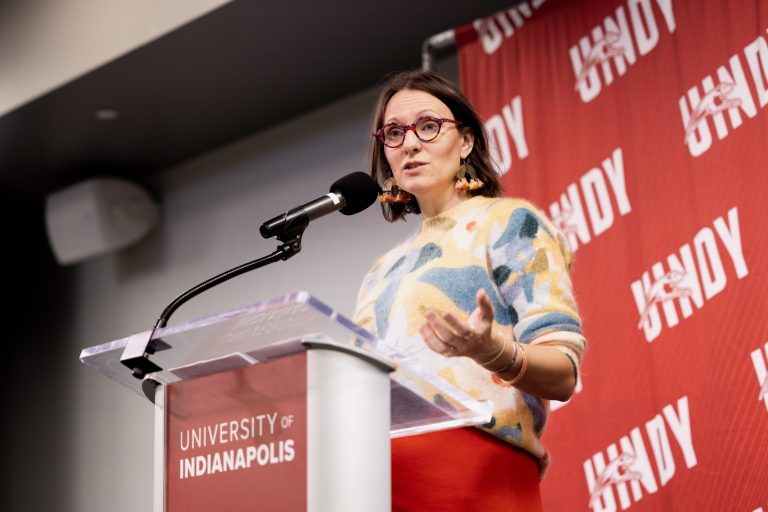
Associate Professor of Sociology and UIndy Faculty Senate President Elizabeth Ziff said her trip to New Mexico City from May 5-15 is “still a green light.” However, Ziff said she finds it interesting from a sociological perspective that places ICE has always been on paper, including Border Patrol, Customs, Department of Homeland Security (DHS) and International Student Affairs on school campuses, are “arguably overriding their authority and jurisdiction.” ICE has been taking a lot of liberties by violating people’s rights, according to Ziff, and they have been racially profiling people without any due process, warrants or any jurisdiction. As a result, Ziff said there is now a new level of safety concerns associated with simply taking people through an airport.
“…This is a potential issue that could still be happening come May, when we travel to bring students, colleagues and anybody through an airport where they might not even make it through security just based on how they look and assumptions that people in these authority positions make about them,” Ziff said.
UIndy emphasizes being part of a global community and having a large international presence, according to Ziff. She said many conversations are happening in different rooms regarding how UIndy can best protect its students, foster a sense of belonging and make spaces for important conversations that need to be had.
Ziff noted that across the board, most U.S. institutions are seeing a decline in their number of international students. She pointed out that it may be a combination of newer structural barriers, including a decline in interest in studying in the U.S., and getting visas is “incredibly harder.” If a student gets approved for a visa, it also takes longer than it used to, according to Ziff.
The Reflector reached out to the Christel DeHaan Center for Global Engagement (CDCGE), and the office declined an interview.
The Reflector also reached out to Associate Professor and Department Chair of International Relations, Milind Thakar, to hear about his recent trip to India over spring break from March 7-17. He responded via email that his trip “went quite well,” and they had no problems. Thakar also said, “In fact, due to biometric scans, immigration was a quick stop to take a photograph and then proceed on our way.”
Assistant Professor of Anthropology Alex Nelson also gave a list of responses via email about concerns regarding his upcoming trip with UIndy students to South Korea from May 6-21. According to Nelson, the trip to South Korea is unlikely to face major disruptions. However, students may experience slightly higher costs due to rising oil prices affecting transportation and food, even though airfare and the travel route remain unchanged.
Nelson said the group will be partially protected from transportation increases because they will rely mostly on subways, and a weakening Korean “won,” Korea’s form of currency, could also offset some expenses. He added that while ICE and Transportation Security Administration (TSA) issues are not expected to affect the all-U.S. citizen, UIndy student group, he has seen the biggest impact among international scholars, noting that travel hesitations and boycotts, particularly from Canadian academics, are reducing their scholarly exchange and appearances at conferences in protest of the current administration.
When asked what responsibility universities have to communicate clearly in support of international students during periods of uncertainty, Ziff said institutions are “first and foremost there for their students.” However, she said that due to different types of communication, it becomes difficult to decipher which messages should go out to everyone on campus, rather than a targeted group of individuals who are the most vulnerable to new changes.
Students are not alone in this, according to Ziff, and they have many advocates and allies for them on campus. If students are currently feeling uneasy or uncertain about current circumstances regarding immigration policies and an influx of ICE presence, Ziff said it is only natural to feel that way.