
Have you experienced times of emotional complexity where clarity lacked, but now, they seem a bit clearer, like the optometrist has shifted to a more distinct, crisper lens on the phoropter?
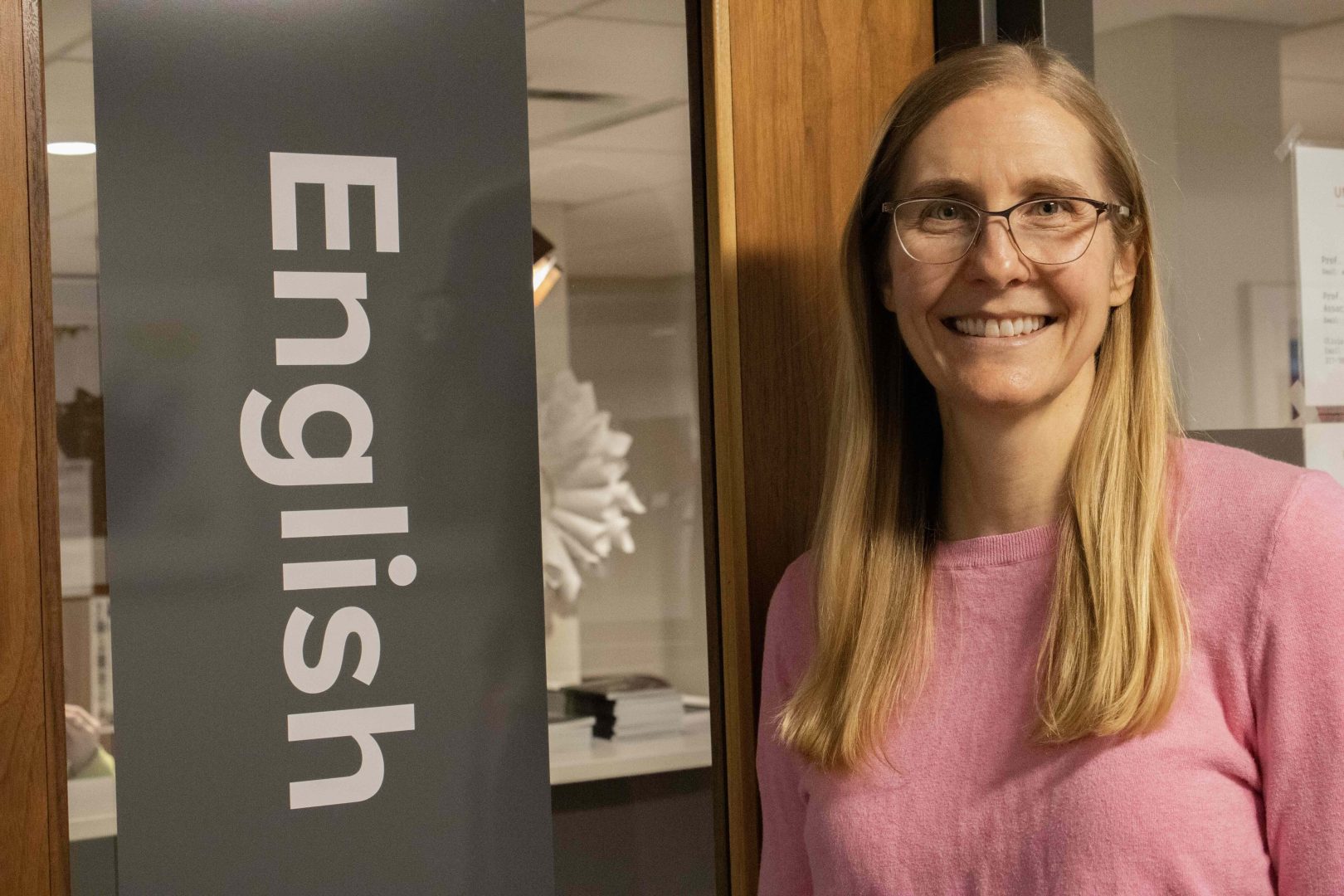
University of Indianapolis English professor and department chair Liz Whiteacre wrote and reflected on times like these throughout her life in her new poetry collection titled “Hindsight 20/40,” which is now available on Amazon, Barnes & Noble and Finishing Line Press.
Whiteacre said she first discovered her love of poetry as a sophomore at Indiana University by signing up for a “Creative Writing Workshop,” which just so happened to fit in her schedule. The class was a group of predominantly science majors, and it was a “wonderful course with diverse perspectives and languages used,” according to Whiteacre.
“That’s when I started to get interested in writing poetry, and I ended up taking a number of creative writing courses, focusing on poetry, during my time [at IU],” Whiteacre said. “This book [“Hindsight 20/40”] stems from my senior honors thesis, where I worked on a collection with the guidance of several professors, and I found it unpacking all these years later in a box when the [UIndy] English department moved over to Good Hall.”
When Whiteacre found the collection she wrote between 19 and 21 years old, she said it was then that she started to realize how fortunate it is to work with emerging young, collegiate writers who are discovering themselves and finding their voices. She also said she started contemplating how her poetry writing has developed over the past 20 years, what she was living through at the time and what she remembered about certain moments.
The collection started with personal reflection and exploration about times that captured a younger version of herself through photographs, songs, smells and certain items that took her back, according to Whiteacre. She said that through realizing the growth in herself, she became hopeful that this might be an interesting read for others who are pondering things that capture snippets of their memories from the past.
Whiteacre said this is the first book of poetry where she has combined photographs and words on the page to help guide readers. In her research process, she spoke to her eye doctor and thought about hindsight and how we perceive things in general to implement into her writing.
“I’ve always enjoyed taking pictures and capturing moments, even before I started writing poetry…,” Whiteacre said. “As we have moved to digital photography and the ease of taking pictures on our phones, it’s a practice that I’ve continued with, pausing to take a photograph of something that sparks curiosity, something beautiful or something curious. Slowing down to look at something ordinary encourages me to pay attention, be present and to write poetry that zooms in on minute moments.”
Kylie Frandsen, a 2019 UIndy creative writing and professional writing graduate, said she first met Whiteacre through her “Intro to Creative Writing” class and later worked with her in “Poetry Writing,” “Advanced Poetry Writing” and on the Etchings Literary Magazine. Frandsen said she was honored when Whiteacre reached out to her to see if she was willing to review a copy of her collection before seeking publication. The concept was inspiring to her to think about how we speak to and think about our younger selves.
Whiteacre is a “very present person,” according to Frandsen, and is an advocate for journaling, sharing your work and believes in the “power of writing.” Frandsen also added that Whiteacre is an “attentive listener and observer,” which is apparent through her writing. Frandsen said she hopes readers will take away a sense of compassion for their younger selves through Whiteacre’s new collection.
“Having taken a few classes at a time in my life where I was definitely writing to heal, I think she taught me a lot about the power of writing to release and name things,” Frandsen said. “We still send each other pen pal emails every once in a while to catch up…She’s very attentive to what’s in front of her, whether that’s somebody who needs something, who’s offering her advice, feedback, or editorial opinion, a student learning to publish or who is writing super sad ‘I need healing’ poems, or a grad [like me] seven plus years later, meeting for lunch and saying, ‘I think I’m going to change my whole career path now.’ She hears you precisely and underneath your words, which comes out in her writing.”
English professor and chairperson of the department at Indiana State University, with a specialization in creative writing, Amy Ash, said she first met Whiteacre through Etchings Press when her book, “The Open Mouth of the Vase,” won the Etchings Prize in 2016. Ash added that their paths have crossed several times since in the literary community at Association of Writers and Writing Programs events.
Ash had the opportunity to read an advanced copy of “Hindsight 20/40” and wrote a review for the publisher, Finishing Line Press. Ash said she was struck by the overall concept of the book, saying it felt “layered, inviting, vulnerable and brave all at the same time.”
“This is a book that really feels conversational and generous to those two voices that are part of the conversation, and I think that is a striking craft approach and risky move,” Ash said. “It’s not something that you see in a lot of collections, and one that is so important to the experience of this book… From a craft perspective, I always appreciate the precision and attention to detail in the imagery of Liz’s work.”
“Hindsight 20/40” is a book that conveys poetry is for people of all ages, and it shows that anything we want to say as writers has value, should be listened to and unrevised vulnerability adds something important to our work, according to Ash. She said Whiteacre’s “spirit of generosity,” openness and interest in finding connections are seen in her work and personality.
“Publishing a book is something important for the poet, but it is also significant for the whole community to celebrate,” Ash said. “For students, I think it’s important to know their professor as not just a teacher, but as a poet, which helps them see the possibilities for their own writing… I think for colleagues in the institution as a whole, it’s an important reminder of the reach and importance of creative and scholarly work, that poets and scholars are creators of art and makers of knowledge, and a book of poetry is a wonderful reminder of that.”