
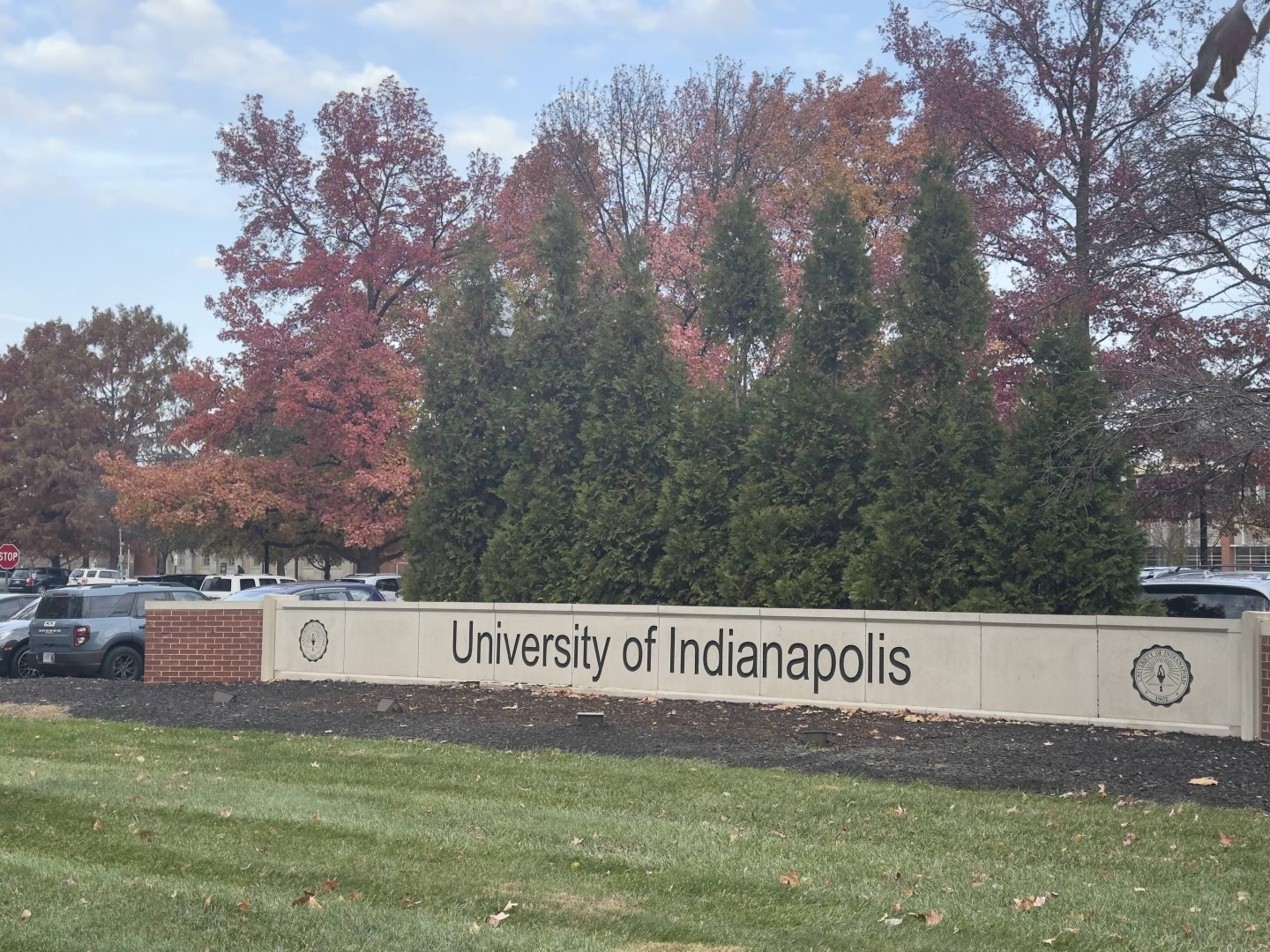
The University of Indianapolis is set to launch a master plan soon, which will serve as a long-term guide for the university’s goals.
“The campus master plan is essentially an assessment of our current facilities, and an assessment of where we want to be next year, five years, 10 years from now,” UIndy President Tanuja Singh said. “What the place should look like, feel like, and do we, you know, what kind of capacity do we have? What if we grow [it] to three times the size of it? All that is already happening.”
The master plan is expected to share similarities with the current strategic plan, as it is being developed in conjunction with it. The strategic plan serves as a three to five-year plan for the university; the current version was first enacted in March 2024 with revisions since, according to Singh.
“The thing that makes our strategic plan really important is, as we have said in the plan, it is a live document,” Singh said. “Our document will change and evolve as the world evolves. For example, this year, we had to adapt pretty quickly to some of the changes that are happening in our environment.”
There are five key pillars for the academic portion of the plan, according to Provost and Executive Vice President Chris Plouff. The pillars include leading health and behavioral sciences, business and technology integration, experiential learning, applied liberal arts and UIndy Online.
“There are a whole number of these things that impact different faculty members differently,” Plouff said. “Some of it impacts many of them. If you think about experiential learning for all students, that impacts all of our majors.”
Singh said the number one goal for UIndy is student success while the university grows. Creating an AI institute and developing community relationships are meant to benefit students.
One of the primary viewpoints of the university is that learning is not a linear process anymore. The university wants to accept and identify with more students, which includes students who might not have finished their undergraduate degree, and other students with untraditional backgrounds, without forgetting the more traditional routes, according to Singh.
“Everything that we are doing, every single initiative, every single investment, every single outcome, we are measuring it based upon what our strategic plan says,” Singh said. “We look at it practically every day.”