

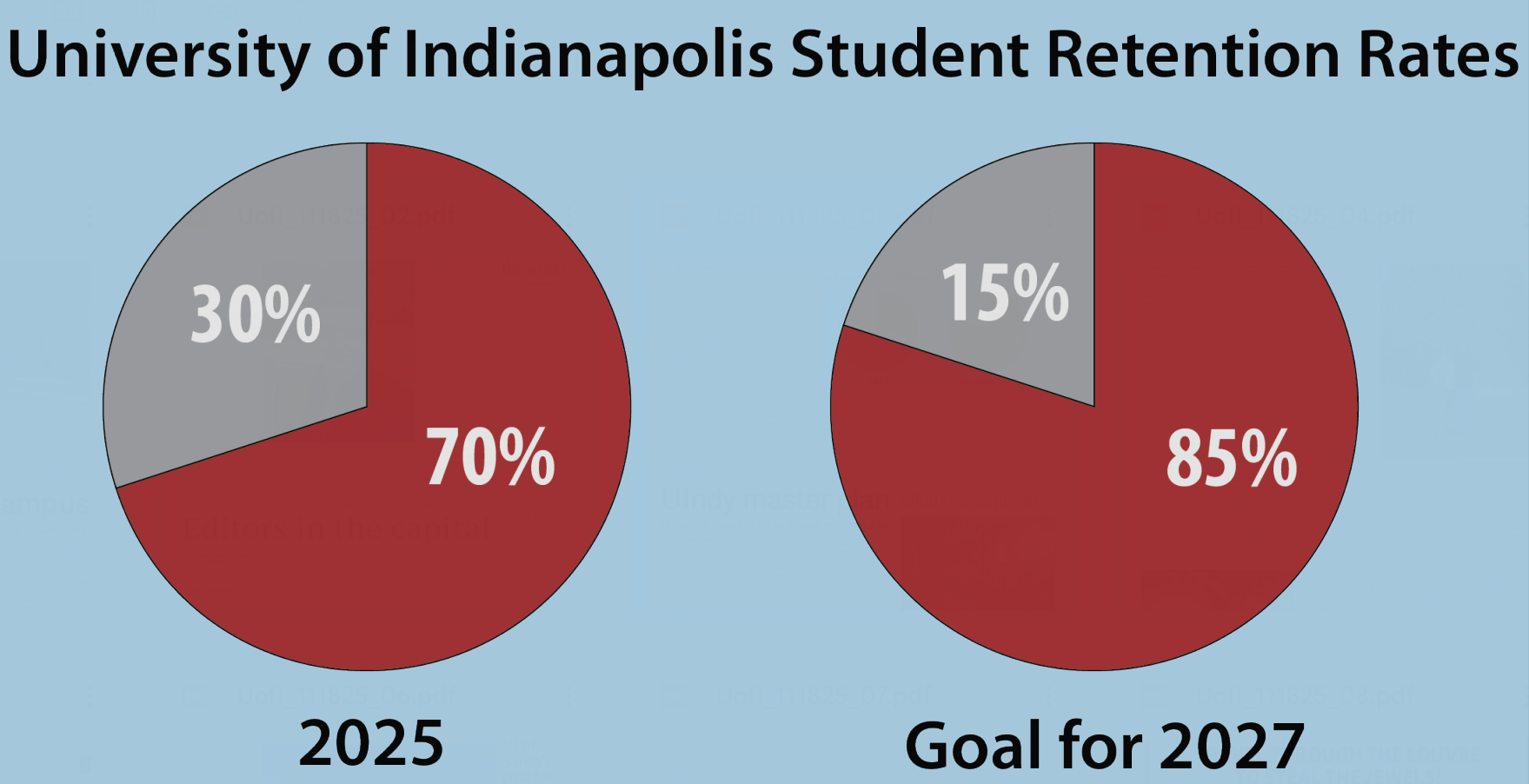
The University of Indianapolis is currently standing at a 70.1% retention rate and has set a goal to have it raised to 85% by 2027, according to Vice President for Student Affairs Carolyn Golz.
Right now, 30% of students who attend their first year at UIndy do not graduate from UIndy. This is due to things such as location, lack of Greek life, majors and financial aid, according to Associate Provost and Professor of Communication Rebecca Gilliland.
UIndy has made a plan to have improvements made for the university and to raise the school’s retention rate. The university plans to accomplish this by making some changes and improvements in areas that will benefit the students. Golz and Gilliland are currently leading the efforts for improvements in university retention. The main effort that they want to undertake is to achieve more effective, efficient and improved communication within the university, said both Golz and Gilliland.
One of these planned efforts to benefit students includes improving the first-year student experience on campus. This is being implemented because how a student reacts to their first year being a college student can set the tone for the rest of their college career, according to Gilliland.
“We’re trying to set the tone from the beginning,” Gilliland said. “We’re taking a very hard look at specific academic courses in the first year, seeing how we can help to support faculty and improve those [courses], and how events can actually coincide with those courses to get students more acclimated to campus from the beginning.”
Gilliland said new student orientations and New Hounds Days will be looked at before new students arrive in order to set a positive tone for them. Efforts are being made to make sure that students have support from the university and that they are more prepared to start their college experience from the very start. Support from faculty and the university includes help from advisors, the staff of Student Affairs, as well as offering things such as workshops to first-year students.
This also includes the university connecting students who may have graduated high school with a low GPA with resources on campus to help them with their studies, such as the school’s SOS workshops and making sure that they are aware of study zones and tutoring on campus, Golz said. The university wants these connections to be made up front for new incoming students, according to Golz.
Overall, the key to this retention improvement process is communication. UIndy Provost Chris Plouff said that it should be easier for students to communicate with the university without having to switch from multiple different places and talk with numerous people to make sure that they are being helped.
“[We are] trying to make sure that we have all the services in place for students to be able to do that much more seamlessly so that we are all communicating and not expecting the student to have to do all the communicating,” Plouff said.
Plouff said UIndy students should communicate with the university if they are being negatively impacted by it.
“We want to know about that,” Plouff said. “So that we can help improve that aspect to make you feel as comfortable, supported, challenged in all those ways [in order] to get the educational outcome and goal that you’re trying to achieve.”