
Mckenzie Campbell: PRO
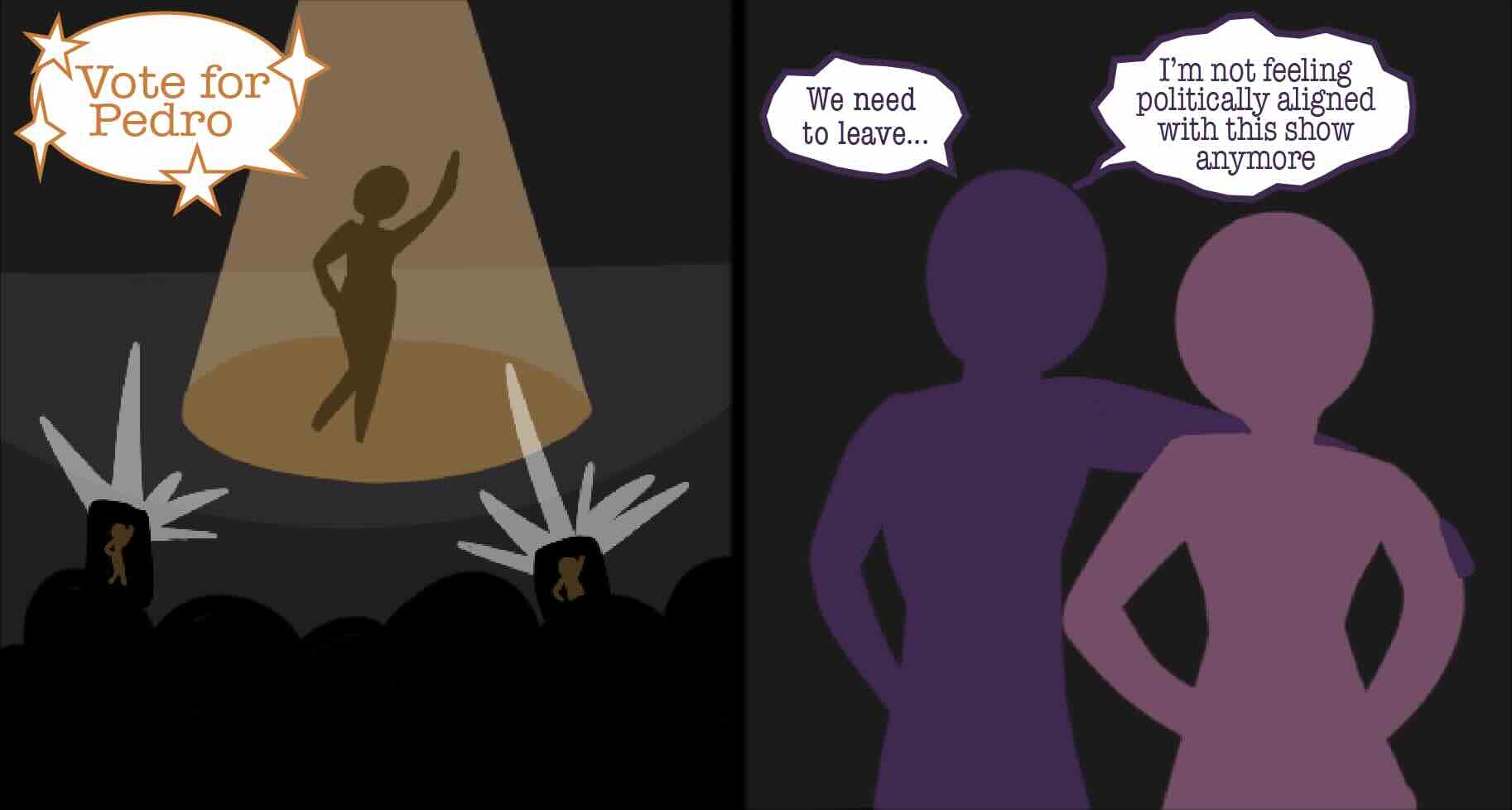
Celebrities’ opinions have always mattered in politics and voting.
Across the world, people fear the consequences they may face after voicing their opinions. Meanwhile, celebrities have platforms, wealth and the ability to influence millions, yet choose to stay silent.
In the recent controversy between singers Macklemore and Ed Sheeran, masses have begun voicing their opinions. Sheeran officially kicked Macklemore from his tour on Sept. 14 after he took a stance on Palestinian freedom. After removing him from the tour, Sheeran has received immense backlash. On the other hand, tickets to Macklemore’s Free Palestine Tour, which he announced shortly after his departure from Sheeran’s tour, sold out instantly, according to People. According to BBC, some advocate that Sheeran’s opinions and unethical actions have no importance, claiming that music should not be political. I disagree.
Public figures are only focused on expanding their fame, wealth, and status, yet they have the opportunity to speak up for those in unfortunate situations and don’t. After his departure, Macklemore took to Instagram in a statement, “Taking a side can cost you…But there is no neutral position between the oppressor and the oppressed,” per BBC. Choosing to remain silent allows the strong to become stronger, overall negatively impacting those whose voices are silenced.
Celebrity influence is not uncommon. Whether it be brand endorsement, healthy habits, or overall lifestyle celebrities have always made an impact. With their ability to capture audiences and spark public action, we should see more advocacy from influential people.
Another example of celebrities setting the standard is popstar Billie Eilish and her brother Finneas. Them took the time to highlight the sibling duo at the 2026 Grammys, where the two were seen rocking “ICE OUT” pins in protest against specific policies with Immigration and Customs Enforcement engagement in the U.S. Elilish ended her night by taking to the stage to accept her Grammy award, claiming “No one is illegal on stolen land.” Although the speech was cut off on television, as reported by Them, Eilish still continues to stand up for what she believes in, hoping to reach all generations, especially by creating a ripple effect among younger demographics.
Gaining the attention of those who may be uninterested or uninformed about political developments is important. Younger people do not tend to watch or read the news, where most political information is shared. Through social media, celebrities can share political information and raise overall awareness. Opening fans’ eyes to the possibility of learning, advocating, and spreading awareness is extremely useful in political campaigning. So stand up for those who cannot!
Natalie Childers: CON
When celebrities speak, the world listens-but should they use their platforms for politics? The Ed Sheeran and Macklemore tour fallout has reignited the debate over where entertainment ends and political expression begins.
During the Ed Sheeran Loop Tour, Macklemore took a moment off his opening set to speak on the conflict between Israel and Palestine. Macklemore was later kicked from the tour while fans were blaming Sheeran for wanting his image to stay neutral. Sheeran later said on stage that he “never wanted to be an activist musician,” according to Variety. It was then revealed by Sheeran that the reason behind Macklemore’s removal was actually because of conflicts with venues and promoters, according to a later Instagram post.
Celebrities are not responsible for educating their fan base. Yet, musicians and actors are currently facing pressure to stand with Macklemore for his opinions at the Loop Tour. In the most simple ways, speaking against political issues is not a part of a celebrity’s responsibilities.
Celebrities, while immensely influential and praised for their works, are just that, celebrities. They are not outright equipped to educate or tell people how to think or what to do.
The argument is that those with a following or a large fanbase ought to use their platform to educate and raise awareness. However, this should be left to the discretion of the figure. If someone feels as though they have no place in the discussion, do not have enough education or have no desire to engage in the discourse, they should not be expected to speak about political affairs.
People shouldn’t look to celebrities for their information or activism, either. Numerous reliable resources help people learn what they can do to make a change. If people want education or action, they can seek it out intentionally from news outlets and true, committed activists.
Expecting celebrities to get involved politically dilutes the message of political causes. It is not enough for people on a stage to talk about their beliefs and what they think is wrong; action is required for words to matter. If the only expectation is that people are speaking about the issue, nothing will happen and nothing will change.
It is important to keep movements like “free Palestine” alive, which celebrities are more than equipped to do. However, that effort means nothing if no one fully understands the situation. Unless every celebrity were to go out of their way to educate, simply speaking on issues won’t do anything. Furthermore, if celebrities were to speak out and provide thorough explanations, the nuances of their own opinions would likely rub off on their fans, leading people to blindly support causes they don’t truly understand from any perspective but the figure they heard it from.
Celebrities have the right to speak about what they believe. They should not, however, be required to do so.