
Pro — Luke Cooper, Editor-in-Chief
Editor’s Note: I serve as the secretary of the Public Relations Student Society of America’s (PRSSA) University of Indianapolis Chapter. PRSSA is the collegiate version of the Public Relations Society of America (PRSA).
If used responsibly, artificial intelligence can lead to many benefits for its users.
According to The Public Relations Society of America (PRSA), AI can lead to engagement in higher-value critical thinking and more efficient content generation, potentially leading to cost savings. There would not be public relations without journalism and vice versa — much of what PRSA outlines in their ethical use of AI guide can be applied to other professions. I agree with their AI guide, not just because I am a member of UIndy’s PRSSA chapter, but rather it aligns with my personal values of AI use.
I interned with the Indiana Management Performance Hub over the summer and my view on AI completely changed. Prior to interning there, I thought AI was a nuisance and almost useless. I consider myself an “early adopter” of most technologies but AI never did it for me. Over the summer I started to use it and actually found some benefit out of it. It was excellent for proofreading emails, social media captions and slideshow text. Albeit the state did not let me use AI until the last three weeks of my internship, it was nice to have a second set of eyes before sending something to my supervisor.
The Reflector uses AI to transcribe interviews and provide grammar suggestions. Most of the time, all the grammar suggestions are denied because AI does not understand what is going on. It is still good to double check because credibility as a journalist hinges on a lack of mistakes. A “moderately significant association” was discovered between the trustworthiness of news outlets and their usage of correct grammar, according to NewsLab. Most outlets average have errors of 10% to 15%, something which can be mitigated with AI.
The 2025-2026 UIndy Student Handbook defines using AI as a form of cheating unless explicit permission has been granted to use it. It makes me upset when I see people have AI write a discussion board, let alone a full paper. That is not what AI is for. I can tell when someone uses AI because when they use it to do entire assignments they cannot tell you what they wrote, let alone what certain words mean in their submission. I have never used AI for an assignment because it is so bad — I can do better. Irresponsible uses of AI is what ruins the experience for everyone.
AI is a tool, much like a search engine. It acts as a teammate. AI is the future, we as a society might as well embrace it.
Con — Ella Harner, Arts and Graphics Director
The one true sign that someone is using ChatGPT for their essay — the em dash.
Artificial intelligence usage has continued growing higher and higher throughout recent years, the share of adults who use it doubling since 2023, according to Pew Research Center. From “brainrot” memes on TikTok, fake products commercialized on social media, and even simple emails have gone through the AI-ringer.
According to the Harvard Graduate School of Education, 46% of AI users between 14-22 use it to help with schoolwork. While this does not mean everyone who uses it for schoolwork is cheating, it’s widely known that’s the reason why many students use AI. Not only is this morally incorrect, but causes knowledge to decline.
Heavily relying on AI for writing is a form of cognitive offloading, or using an external tool to reduce mental effort, according to Honolulu Civil Beat. The more people rely on AI, the less they use their own critical thinking skills. This diminishes media literacy, causing people to lose important skills such as social and political understanding.
Yet, even people who aren’t using AI programs are being hurt by them. According to Medium, certain words and phrases, like the em dash, are tell-tale signs of AI usage in writing, but these words come naturally to good writers. It is easy to search for an AI-checker, with schools often using Turnitin to check for plagiarism. Though, the problem with AI-checkers is that it flags “big words,” like furthermore and consequently, but those are just common words for good writers. The question is, will this cause writers to dumb-down their own work, in order to not get flagged for AI-usage?
According to the UIndy 2025-2026 Student Handbook, students cannot cheat on their work, and that includes preparing work or conducting research through a third-party or artificial intelligence. Some professors even have a no tolerance policy. So even at UIndy, people with academic and professional writing backgrounds could potentially have the fear of getting their writing flagged.
AI is a problem, no matter the advantages. While there are some things it improves, it continues to impact people’s critical thinking and learning skills.
image sources
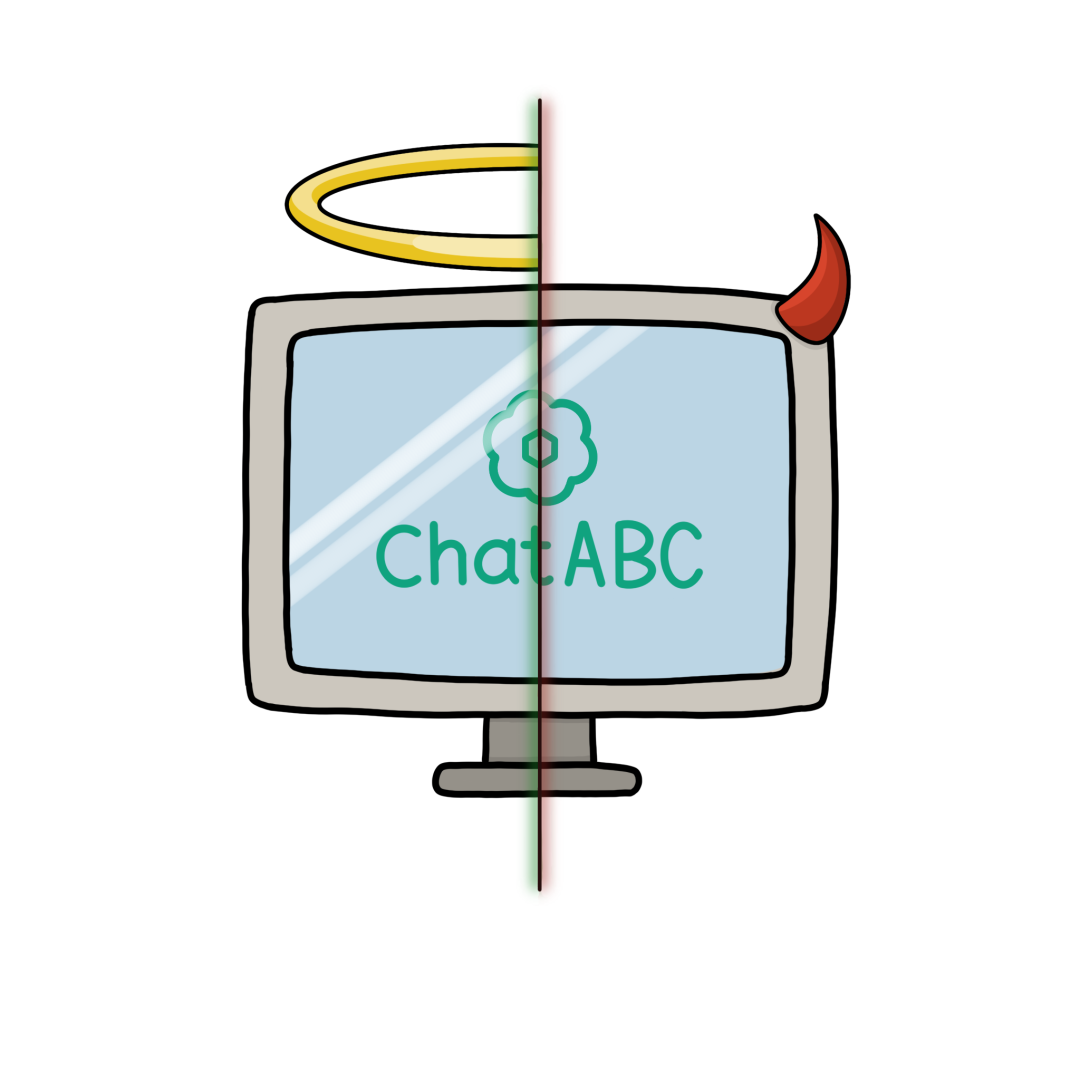
- unnamed: Graphic by Ella Harner