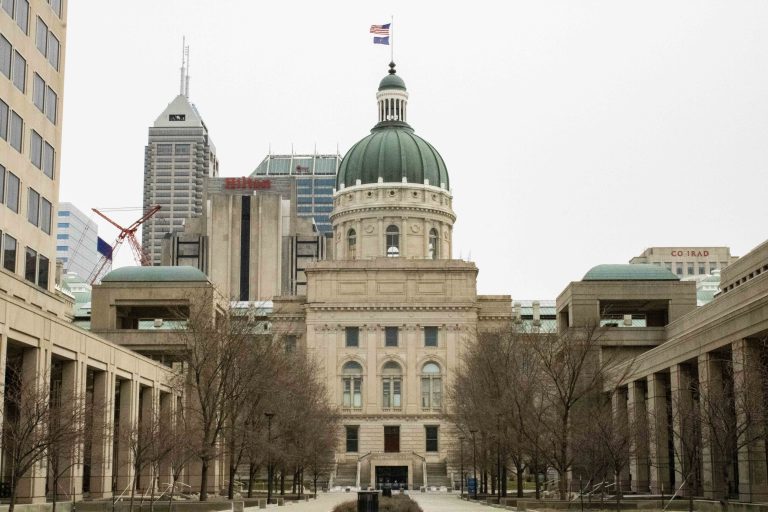

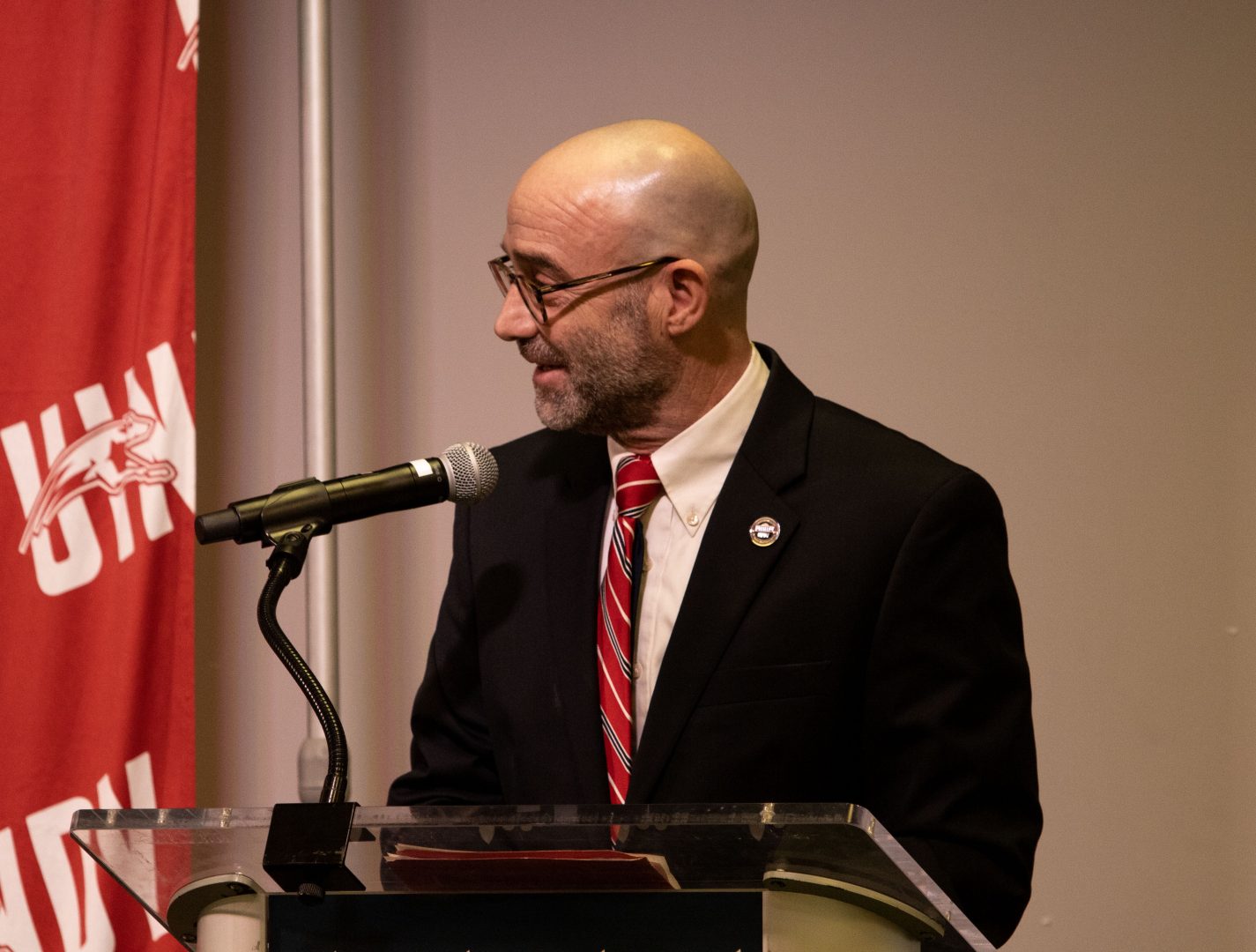
The eleventh annual Richard M. Fairbanks Symposium, focusing on the topic of Civility and Civic Leadership in the Circle City, took place on Feb. 18. The event was hosted in partnership with Indiana Humanities.
Ted Frantz, chair of the University of Indianapolis History department, professor and a member of the board at Indiana Humanities, said the topic of civility was chosen for a combination of reasons, including the lack of civility in society.
“Our politics have become super saturated…bearing more partisan discord than we could have thought possible,” Frantz said.
Frantz’s goal for the symposium was to bring students, alumni and members of the community together and present them with tools to help them become better citizens. He and many of the other speakers emphasized the importance of listening to alternative viewpoints.
“I think the ability for people to listen to diverse ideas is vital to a strong society,” Frantz said. This ideal is central to the overarching concept of civility that was shared at the event.
Author of “The Soul of Civility,” Alexandra O. Hudson, was one of the keynote speakers. She argued that civility is separate from politeness, based upon our motivation and disposition, rather than the outward appearance of our actions.
“Civility requires rediscovering a general regard for our fellow persons and citizens,” Hudson wrote in “The Soul of Civility.” “It demands that we revive the basic respect we’re all owed, and that we owe to one another, in light of our shared moral status as members of the human community.”
Hudson acknowledges that adhering to this standard of civility is not easy, especially when it comes to those with whom we profoundly disagree. Despite this, she maintains that we must acknowledge that all people are “infused with irreducible dignity and worth,” and resist the desire to dehumanize them, falling victim to our base emotions.
“Being angry and frustrated constantly gives our power away to others,” Hudson said. “I encourage people to reclaim their power and agency, to rise above the situation and act according to principle.”
Hudson believes we all have the “responsibility to be part of the solution” by spreading civility in our day-to-day lives through small acts of kindness. While such actions may seem insignificant, she asserts that they are the “small but powerful threads that weave together and strengthen the tapestry of our democracy.”
Through fostering welcoming environments, educators are in the prime position to further civility by teaching their students its importance within society, according to Hudson. She wrote that educators can “help bring our best selves to bear in our relationships with one another and our communities.”
Laura Merrifield Wilson, UIndy Professor of Political Science and keynote moderator, said she believes that ensuring her students feel free to express themselves is among the greatest of her responsibilities as a professor. Wilson explained that it is difficult to cultivate this in a classroom, where people feel safe enough to share and express how they feel without feeling “hampered or beaten down” when others disagree.
It is vital for students to be exposed to a variety of viewpoints, according to Wilson, even if it means they are stepping outside of their comfort zone. For this reason, she integrated attending the symposium into her classes this year.
“I think everyone’s voice is important and deserves to be heard,” Wilson said. “You need to be confronted with other opinions and should feel a little uncomfortable. You have the American right to have your feelings hurt.”
Wilson acknowledges that the current political climate makes this difficult, with discourse becoming “very uncivil” and disagreements resembling true competition, “where we feel like it’s us versus them.” However, she maintains that “everything is capable of change” and says that her students give her hope for the future.
For those who attended the symposium, Wilson urged them to implement the strategies they learned, making an effort to bring positive change.
“Change itself isn’t inevitable,” Wilson said. “If we want to see change in the world, we have to incite that kind of change.”